Friday, June 29, 2012

Swat Experience 2011: my pics are gone!!!!

I have been going through the photos I took in Swat (summer 2011 trip), and I realize I still haven't discussed so much of what I'd promised my readers I would! [[Wait, WAIT!!! I've lost most of my pictures!! They were somehow deleted from my hard drive, and I even installed Pandora Recovery in a futile effort to recover them, but I've been successful in recovering only a few! It's SO heartbreaking because I took thousands of pics of virtually everything and anything that came my way--including the first bowl I drank water in, cow dung, our chickens and other animals, a mother wiping the nose of her baby son with her chador/chadar/sazar/hijab, something called "nazar panra" that my aunts had to do on me when I got sick  there because they were worried that someone must have given their niece the evil eye, a little "dolai" that my uncles and grandpa made for me when I was ill because they didn't want the flies and other bugs to bother me ... and other random but totally awesome things like this! The only pics that are left are the ones I've already posted on this blog and the ones I've posted on Youtube. Fortunately, all of the videos I made there are still on my PC. Just not the pics. You've no idea how frustrating and horrible it feels, okay!!!!

Ahhhh!!! They're gone now, dunya!! ALL GONE!!!! Lemme just saw a few more things and then I'll go cry a few buckets of tears and then some more.

So I wanted to tell y'all that I was supposed to have written on my experience in Swat. People keep asking me, and I keep having to repeat the same things... though I often find myself unsure about how exactly I felt there. I'll explain that in another post ('cause I just got depressed all over again remembering that I've lost all my pictures). But I really do need to write all those thoughts before I forget them all. There's a lott good and a lotta bad, and I need to remind myself of both every once in a while.

Among the topics I need to write on are:
  •  the Taliban stories that my cousins told me (imagine: they'd go to school daily, seeing beheaded humans hanging to the poles near their schools, prisons, etc.... I cringe thinking about what this means for these kids' future! They have to be the strongest people I know to have survived it all)
  • the pardah/purdah system in Swat, girls and skin-color problems (this is unfortunately common all over South Asian and much of the Middle East, but I've a few stories and personal experiences I'd like to share with my blog readers)
  • personal relationships among the people of Swat (fear not: I won't disclose any information that shouldn't be disclosed! Just wanna give a general idea to my readers about how people interact with each other there, both positively and negatively)
  • the class/caste system in Swat
  • how customs have changed in the last 10-12 years
  • my general observations and conclusions about the society there
And since I'm a bit nostalgic this summer, I'll also share some memories of Swat! Na, wait - I've shared most of my Swat memories in another post: Part I; Part II. But there's still a lotta things I forgot to include in those memories that I feel like I need to write on, so.

All right. See y'all soon with these topics. And please, PRETTY PLEASE pray for a miracle for me to get my pictures back!!! I don't care if you don't believe in miracles normally; believe in them now! I will cry! I Will Cry So Hard If I Don't Get Those Pictures Back!!! SAVE MEEEEEEEEE!!!

~ the Qrratu

Sunday, June 24, 2012

Pashtun Personality of the Week: Khushal Khan Khattak, the Pashtun Warrior-Poet

As I had promised in a previous entry, each Sunday, I will introduce my readers to a new Pashtun personality. I'm starting with the famous ones, and if you've any suggestions for the upcoming week, feel free to let me know. Remember: their gender, time, talents, beliefs, etc. don't matter; all that matters is that they have contribute to Pashtun society and culture in some way, however small or big.

Also, I don't claim to be saying everything about these people; in fact, I'm going to try to keep these entries very short--just enough to give the readers a brief idea of who these people are and why they matter. But if I neglect to mention something very important about them, please feel free to let me know.

Khushal Khan Khattak (also known as Khushal Baba) (1613-1689)
Khushal Khan was born in 1613 to the Khattak tribe of the Pashtuns in Akora, located in modern-day Nowshera in Khyber Pashtunkhwa. He is often remembered for his bravery, skilled poetry (written in Pashto and Persian), and leadership, as he was a warrior, poet, and a tribal chief. He had 57 sons and a few daughters, but most of his sons proved to be his enemies and betrayed him every chance they got, as will be narrated below

Thursday, June 21, 2012

International Pashto Day - June 21st

Dear world,

June 21st has officially been declared International Pashto Day. As most of y'all know, I'm a native Pashtun, born and raised (for 12 years) in Swat, Pakistan, and so my native language is Pashto. FYI: Pashto = Pukhto = Pushto = Pakhto. It's the same term for the same language in different dialects, just like Pashtun = Pukhtun = Pakhtun = Pushtun = Pakhtoon etc. In Pashto, however, it's written in only one way:  Pashto =پښتو
Pashtun/Pukhtun = پښتون  
I explained this dialectical difference in an earlier post titled "The sh/kh difference in Pashto."

Don't want to make this another long post, but I just wanted to inform everyone that June 21st is International Pashto Day, so, especially if you're Pashtun, try to speak in Pashto as much as possible for at least this whole day :) 

Also!!! I've come up with another great idea (I know, I know - I'm full of ideas but totally empty of actions. You'll live with it): Each week, I'll write about a great Pashtun leader (or not leader, just someone ordinary who's done something extraordinary for the Pashtun people). Time to make this blog more informative, eh - but don't get too excited: my opinions aren't going anywhere. I'll still insert them in my blog wherever I think they may contribute to a discussion.

k, starting this Sunday, inshaAllah, I'll begin my series of Important Pashtuns You Should Know about. Feel free to recommend a list. They can be political leaders (Malalai of Maiwand, Bacha Khan (Ghaffar Khan), etc.), poets/philosophers (Ghani Baba, Nazo Ana, Ajmal Baba), singers/musicians (Sardar Ali Takkar, Naghma); they can be from today or from yesterday--or from tomorrow (i.e., young/emerging leaders).

Totally looking forward to starting this, da khaira!  

Wednesday, June 20, 2012

Why We Mourn the Loss of Celebrities: RIP, Ghazala Javed

In this post, I want to:
- talk a little more about Ghazala Javed's death
- discuss the dangers of being a singer in the Pashtun society
- consider why we mourn the loss of celebrities and other "important" people while not expressing as much sorrow over the loss of "ordinary" people (after all, why all this fuss over Ghazala Javed's death but a mere "RIP" for the innocent civilians who get killed every second in Pakistan, Afghanistan, Iraq, and all other war-torn regions of the world, right?

More Ranting on Ghazala Javed's Passing

All right, so. I have been unable to think about anything else ever since I heard about Ghazala Javed's murder. The one good thing so far has been that virtually the whole world has been informed about her tragic death. News media from various parts of the world have written about her, and almost every Pashtun I've come across so far (and there have been thousands - mostly online) has expressed intense sorrow over her loss. Understandably so.

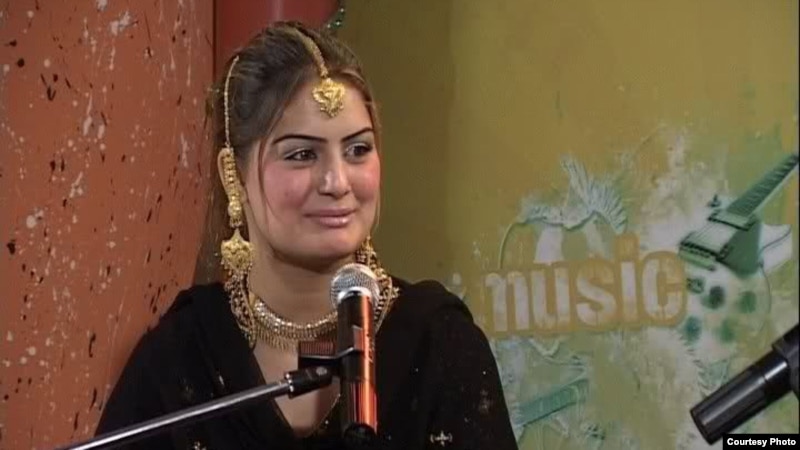
Ghazala Javed
And so I'm very pleased at the kind of attention the singer's death has received and is receiving. Everyone's talking about it, people from all parts of the world already came to know about it within hours, and the number of searches for "Ghazala Javed death" that are coming to my blog is stunning. Youtube Videos about the incident received thousands of hits within hours of their posting. There are videos that clearly show the reaction of people around her to her death, displaying her corpse (ouch! It hurts to use this word for her!) as her fans cry in each other's arms. They're so painful to watch, almost disturbing. I think all of these points are witness to her popularity and the fact that everyone was panicking when they found out she was killed and they had to know what Azrael, the angel of death, was thinking when he so brutally snatched Ghazala's spirit with the will of God.

Earlier, Khyber TV, a popular Pashto channel, hosted a program in honor of Ghazala Javed, and the hosts also discussed women's issues in the Pashtun society, especially female Pashtun singers and the dangerous life they're all leading. This Khyber TV show in particular gave me the hope that something positive, in favor of Pashtun women, may result from the tragedy.

Monday, June 18, 2012

Pashto Singer Ghazala Javed Killed

Ghazala Javed performing
This morning, with my head buried in a pillow, I extended my hand to reach for my phone (that's how I wake up - the phone has to be the first thing I touch and see, lawl). Go on Twitter (these days, Twitter is my BBC), and, since most of the people I'm following on Twitter are Pukhtuns, my entire feed is filled with "#RIP Ghazala" and my heart starts to sink. Turns out, the singer and her father were killed by some "anonymous armed men"!

The reports state that Ghazala Javed was heading out of a beauty salon when she and her father were shot in the car by these supposedly unknown men. The latter source, cited above, also claims that her ex-husband may be involved in the murders (they divorced some 6 months back, it says). Whoever these "unknown" men are, I assure you we'll never know because law does not exist in Pakistan.  And ifff it does, anyone can and does break it any time she/he feels like it (especially if it has to do with the death of a female family member. Oh, you know - it always goes justified as "preserving one's family honor"!). And yet again, justice will lose.

Ghazala Javed is one of the few Pashto singers whose songs I can tolerate. I think she was very talented, had a great voice, and could sing very well.  When you have talent coming out of females in a society that looks down upon women's public performances (and in a society that looooves music but hates the musician, both the male and the female musician), you can't help but feel the severe loss.

Rest in peace, Ghazala! May you and your father be blessed with paradise for all of eternity and may the cowards who killed you and your father be punished mercilessly for all of eternity, both in this world and in the next. Aameen. If that's not justice, I don't know what is.

P.S. She even got a Wikipedia entry now. Yay for her! Click here to listen to a song of hers. It's called "Baran dey baraan" ("it's raining").

The video below is a tribute to her. The song is "Zama loya gunah daa da che Pukhtun yam" ("My biggest fault is being a Pukhtun"!) sung by Pashto singer Fayaz Khan. Indeed - the Puhktun's ultimate crime is being born a Pukhtun!

Saturday, June 16, 2012

The Haraam Police: on Muslim vegetarians and vegans

We all have met at least thirty-eight Muslims who feel like it's their duty to tell us that something we do, believe, think, or desire is haraam (forbidden in Islam). I can't stand those people. I understand some of them have good intentions, but many of them are so convinced that their way of looking at or practicing Islam is simply the only way to look at or practice Islam. And they just assume that we don't know that the opinion they are trying so hard to impose on us actually exists out there. So I find these kinds of Muslims very annoying. They take that Qur'anic verse "enjoin the good and forbid the evil" to what may be the most extreme level possible, and they just won't shut up until you stop doing what they believe is haraam.

Fortunately, one of the advantages of being an Islamic Studies student is that when they try to tell you that something you do, want, or think is haraam and you smile at them and give them a sharp answer (well, I never do this, but still) in a very gentle manner, they never bother you again, though some will insist that you stop because "God knows what's best for you, and you don't."

But this isn't about the haraam police in general. This is about vegetarian and vegan Muslims and the troubles they receive from their fellow Muslim "brothers" and "sisters." (No, not all Muslims hate on these people.)

Friday, June 8, 2012

Better Safe than Sorry: on the existence of God

You are to assume the possibility that God exists. If you assume otherwise, you will be eternally doomed. Once you assume that God may exist, you are to start seeking Him all of your life until you find Him. If you fail to find Him, you will be eternally doomed – no question about it.

Indeed, He guides whom He wills, the Sacred Scriptures tell you. But if you end up concluding yourself that He does not exist after all, it is entirely your fault—even though you were simply not one of the fortunate ones whom God willed to guide—and you will be doomed eternally without a doubt and without a question.
But ... what a coincidence that I was born into the right religion! What a coincidence!

This reminds me of the quote I constantly read on certain Muslims' FB profiles that read something like:

“I’d rather live my life believing in God’s existence and die to find out that He does not exist than to live my life denying His existence only to die and learn that He does exist.”

What? This is what all it comes down to, a mere probability that He does or does not exist, a chance you take by believing in Him?
This should contradict the basic belief that the Quran attempts to promote, which is (as many Muslims will tell us over and over) to reason, reason, and reason. The belief promoted by the above quote, however, suggests that it's better to be safe than sorry. So you're just gonna go with the flow today that JUST IN CASE God exists, you're on the safe side ... just in case.

Friday, June 1, 2012

My Interest in Islamic Studies - Part II: why Islamic Studies in the West

I promised to continue with my series of my Islamic Studies pursuit, including why I’m settled on doing it in the west (as opposed to in a Muslim country) and what the reactions of many Muslims (friends, families, relatives, people I meet on the plane, etc.) have been. So in this post, I’ll explain why I prefer to study Islamic Studies in the west, in the U.S., and why it’s more beneficial than harmful. And in the next post in the series, I'll discus the reactions and problems and all.

“So, what do they teach you?” people often ask me when they know that I’m doing Islamic Studies. They’ll say this with a … rather mocking tone. After all, what COULD anyone living in the U.S., the ever-infidel country that hates Islam and Muslims to the core, “teach” me about Islam, right? At least, what “good” things could they possibly say about Islam, right? Wrong. For many reasons.

Wednesday, May 30, 2012

The DOs and DON'Ts of Raising Kids

I'm not a mother and I'm no expert on raising kids. But I’ve learned lotsa important things from raising Kashmala (she lives with me and my family) and, before her, her brother. (I have another nephew as well, who’s now 1.5, but I rarely get to see him, unfortunately.) Below are some of the things I’ve learned about children (e.g., things to do in front of kids, things not to do, etc.) from my own experiences, from a Psychology class I took a long time ago, from movies/books/tv shows (like Law & Order – SVU), and from the Internet. Many of us already know that kids are very observant, but we still tend to forget that they pick up things quite fast. Experimenting is normal for them, and so it’s not uncommon for a child to do something just to see what it will result in. In such moments, we tend to yell at them and/or punish them, make them realize that it’s wrong – but we don’t do the more important thing: explain WHY it’s wrong.

Lately, Kashmala has been asking me “why” every time I tell her something, even if it’s not about not doing something. She once asked me why people cry. And I gave an answer and she said, “Why?” And the “Why” went on and on and on and on … till she was distracted by something else.

Tuesday, May 22, 2012

My Interest in Islamic Studies - Part I: the beginning

Ever since I entered Islamic Studies, I have been having the hardest time with Muslims ever. And no one seems to understand completely--because they are not in my exact situation, because every Muslim who is pursuing Islamic Studies in the West has different experiences with it, because everyone practices and understands Islam differently, because everyone’s families are different, because everyone deals with the same situations differently. And few really understand what "Islamic Studies" means (I myself am still exploring this, so that's not to imply that I know and no one else knows), and there are many, many misconceptions about the field, as is the case with many other fields. I have therefore decided to discuss the matter here on my blog in an effort to dispel some of the misunderstandings and  to initiate a dialogue with those who cannot understand why a Pashtun Muslim female would be interested in Islamic Studies and strive to pursue it in the U.S.-- or anywhere in the West.

I thank you in advance for your readership! Please feel free to post any questions and express any feelings about it, even after I have finished with the series (a series of about three blog posts or so); you may pose your questions/comments anonymously if you'd feel more comfortable doing that.

This first blog post will be on how I got started. Part II will be on why I have decided to pursue Islamic Studies in the U.S. and not in any Muslim country like Pakistan, Egypt, Saudi Arabia, etc. Although I do intend to study certain Islamic Studies courses in traditional Islamic institutions as well (e.g., Al-Azhar in Egypt or the Islamic University of Medina in Saudi Arabia), I have learned that a traditionally Islamic institution will not be the better option for me (again, to be explained in the next post). In Part III, I will discuss the consequences of my entering Islamic Studies, how my family/relatives/friends and many other Muslims have reacted to my decision, and how I continue to struggle with it as I explain to others what exactly I am doing and why and how either they simply refuse to understand or I am unable to explain it clearly. You see, when people ask me what I am studying and I tell them I'm doing Islamic Studies and Gender Studies, they ask why I would want to pursue Islamic Studies in the west (and many often even dare to claim to "know" my intentions). In the third post, then, I will share with my readers the struggles and consequences I continue to face, especially from Muslims who, even after I explain to them what I'm doing and why, don't seem to tire from asking, rather unpleasantly, "But why in America? Why not in Saudi Arabia?" or "What - you don't think Zakir Naik is the most brilliant, most knowledgeable Islamic scholar of our time????? You must not be studying the correct Islam, that's why." Or "WHAT?!! You mean you don't believe Shi's are not Muslims??? What kind of Islam are they teaching you?" And, my favorite one: "Are your teachers Muslims? ... Hey, do your female teachers wear hijab [cover their heads]?"
Yeah, that kinda stuff.


To put it very simply, I was aware of the consequences of my decision to pursue Islamic Studies when I decided to go for it in the beginning, but I was honestly not prepared for what it has come to: it's simply too difficult to understand myself let alone to explain to anyone else. I entered the field hoping to liberate myself intellectually and spiritually, but instead, I seem to have smothered myself.

Now, let us proceed.

Monday, May 21, 2012

Things to Do Before I Turn 30

So, a very common blog post is the list of things to do before one turns 30/40/50/etc. I'm about 5 years away from turning 30, inshaAllah, so I figured I should write a list of things I'd like to have done by the time I'm 30. If they don't happen, no worries - I'll do them later on, ka khairee. But hopefully, they'll all get done! Some of these things may seem very small and silly to many people, but that doesn't bother me. They're all important to me.

I'll add to the list as I remember more. Oh, and I decided not to number them so as not to overwhelm myself - haaa haaaaa.

They’re in no particular order. Just the order in which they came to my mind.

Monday, May 14, 2012

Regretted. Tortured. Empowered.

In my Sociology of Sex and Gender class in summer 2009, my teacher asked us to share some of the discriminations we have encountered as women, men, both, or neither. Although I was the second person to go, I asked if I could go last to see what the other students had to say or how they defined and experienced discrimination in 21st century America.  As I listened to stories about males preferring “feminine” movies or cars to masculine ones and being judged for their preference and about females being considered “bitchy” for wanting to be leaders, and other similar stories, I was reminded of the burdens that the Pukhtun woman brings to her Pukhtun family and to her Pakistani/Pashtun society as a female. Consider the following.

Related Posts

Related Posts Plugin for WordPress, Blogger...